Does My Child Need Occupational Therapy?
6 August 2026 · Dr Robert Parry, MBBS FRACP, Paediatrician
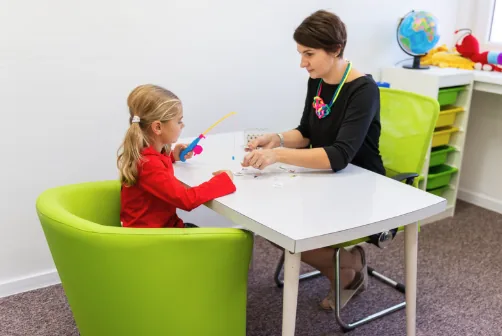
Parents often hear that occupational therapy could help their child, from a teacher, a GP, a paediatrician or another parent, and wonder what it actually involves. This article explains, in plain language, what paediatric occupational therapy is, the kinds of things it helps with, and how it works at Hunter Children's Clinics. One thing to know from the start: occupational therapy is not about changing who your child is. It is about helping your child do the things they want and need to do, in ways that work for them. Your child is not a problem to be solved. They are a person, with their own strengths, preferences and ways of doing things, and in occupational therapy they are the most important member of the team.
What is occupational therapy?
For a child, their "occupations" are the everyday activities of childhood: playing, learning, dressing, eating, making friends and joining in at preschool or school. Occupational therapy is an allied health profession that helps children take part in those everyday activities. Rather than treating a condition, an occupational therapist looks at the child, the activity and the environment together, and works out what would help this particular child join in, at home, at school and in the community. Often the most powerful changes are to the task or the environment, not to the child: a different pencil grip, a quieter corner, a routine broken into friendlier steps. Good occupational therapy also listens to the child, not just the adults: what they enjoy, what feels hard from where they sit, and what they would like to get better at.
What paediatric occupational therapists help with
Support always starts from a child's strengths and interests, because children learn best through the things they already love doing. Our occupational therapists commonly support children with:
- Sensory processing
- Fine motor skills and handwriting
- Self-care and daily living skills, such as dressing, mealtimes and toileting routines
- Play and social skills
- School readiness
- Emotional regulation
Support is always shaped around the individual child and family, and often includes practical strategies for home and school as well as sessions in the clinic.
Signs your child might benefit
There is no test a parent needs to apply at home, and every child develops in their own way and their own time. Families often reach out when everyday life is feeling like hard work for their child: buttons, cutlery or pencils that will not cooperate; morning routines that end in tears; play with other children that is hard to settle into; busy, noisy places that feel overwhelming; big feelings that take a long time to recover from; or a growing reluctance about preschool or school tasks. None of this means something is wrong with your child. Big feelings and tricky moments are usually a child's way of telling us that the day has asked too much of them, not misbehaviour. Differences in how children move, play, think, feel and sense the world are a natural part of human variation, and sometimes the world simply is not set up for the way a particular child does things. Occupational therapy works on that fit, shaping tasks, environments and skills together so that daily life asks less of your child in the ways that are hard, and makes more room for the ways they shine.
If you are unsure, you do not need to work it out alone. Talk to your GP, your paediatrician, or contact our team, and we can help you decide whether an occupational therapy assessment makes sense.
What about sensory processing?
Many children experience the sensory world differently: sounds that feel too loud, clothing textures that are hard to wear, a need to move and touch more than other children, or discomfort in busy environments. These experiences are real and can have a big effect on daily life. Sensory differences are not faults to be fixed. They are part of how a child experiences the world, and often they come with real strengths, like noticing details others miss. It is worth knowing that "sensory processing disorder" is not a recognised standalone diagnosis, and researchers are still building the evidence for sensory-based therapies. For that reason, our approach is practical and honest: we work to understand your child's sensory world, and children themselves are often the best guides to it, so we listen to them as well as to you. Goals are set together in plain terms about the everyday things that matter, and progress is reviewed openly so you can see whether the support is helping. Sensory differences can also be part of a bigger picture, such as being autistic or having ADHD, and if that seems possible we will talk with you about whether a broader assessment would be a helpful key to understanding your child.
How occupational therapy works at our clinics
Occupational therapy at Hunter Children's Clinics is provided by our occupational therapists, Emilie De Rop and Maddie Doyle, at our Carrington clinic. For children under 12 we begin with a parent-only intake session, which gives you space to talk openly about your child's strengths and challenges; for children 12 and over, parents choose whether the young person joins that first conversation. From there, assessment and support are planned around what matters to your child and your family. Sessions are built on your child's interests, move at your child's pace, and work with their agreement rather than demanding compliance. Where a child can tell us their own goals, those come first. The aim is never to make a child seem less like themselves; it is a full, meaningful everyday life, lived their way, with the skills and supports that make it possible.
You do not need a GP referral for occupational therapy at our clinics. Fees, Medicare care plan rebates and NDIS arrangements are explained on our fees and referrals page, and our reception team can talk you through what applies to your family.
Frequently asked questions
Do we need a GP referral for occupational therapy?
No. Allied health appointments at Hunter Children's Clinics, including occupational therapy, do not require a GP referral. A referral or plan may still be needed if you want to claim costs through a funding scheme such as a Medicare care plan or the NDIS, and our team can guide you through what applies to your family.
Which clinic offers occupational therapy?
Occupational therapy appointments are held at our Carrington clinic at 93A Young Street, Carrington.
Can we use NDIS funding for occupational therapy?
Yes. The NDIS funds allied health services such as occupational therapy, and our team works with NDIS participants and their plans. Our reception team can explain the service agreement and funding steps when you enquire.
You can read more about the service on our paediatric occupational therapy page, or contact the clinic to talk about your child.
This article is general information only and is not a substitute for individual medical advice. If you have concerns about your child, please speak with your GP, paediatrician, or treating clinician.
Related reading: signs your child may need speech therapy, and what to expect from a parent-only intake session.